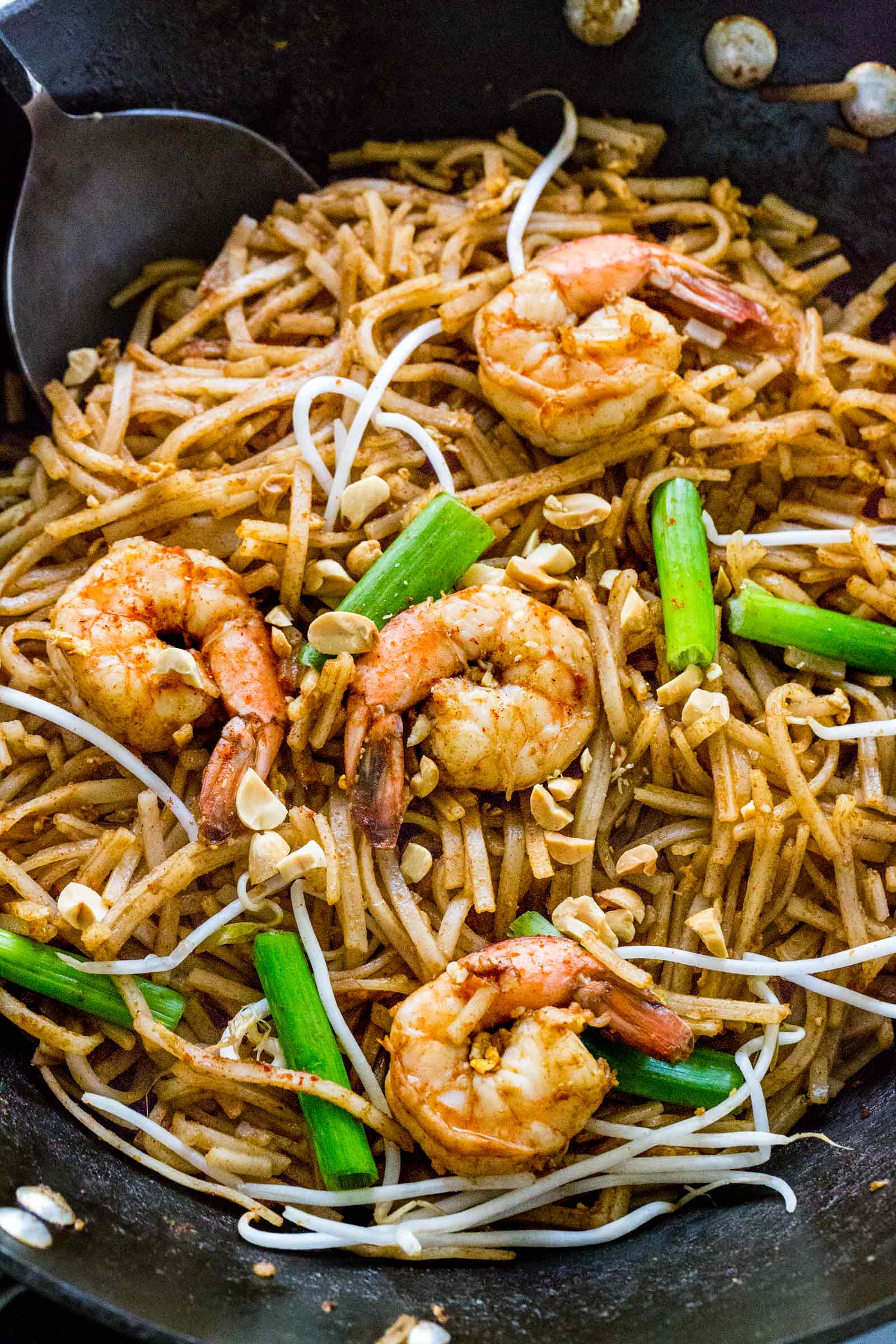
You know that moment when Pad Thai lands on the table and you can already tell it’s going to be good? Glossy noodles, that sweet-savory aroma, a squeeze of lime waiting patiently on the side. That’s the energy we’re bringing here, without complicated steps or mystery ingredients you’ll never use again.
This version of Pad Thai keeps things balanced, bold, and weeknight-friendly. The sauce comes together fast, the noodles stay silky instead of sticky, and everything cooks in the right order so nothing turns soggy or overdone. If you’ve ever wondered why some Pad Thai tastes flat or claggy, this one quietly fixes all of that.
- Why People Keep Coming Back To This Pad Thai
- What Goes Into This Pad Thai
- Add-Ins And Swaps That Still Play Nice
- How To Make This Pad Thai
- Pro Tips From Someone Who’s Ruined Pad Thai Before
- Recipe FAQ’s
- Pad Thai Recipe
Why People Keep Coming Back To This Pad Thai
- The sauce actually tastes like Pad Thai. The balance of salty, sweet, and tangy is spot on, with no single flavour hijacking the whole dish.
- Noodles that stay slippery, not gluey. Proper soaking and timing mean the pad thai noodles finish cooking in the pan, not the bowl.
- Fast, high-heat cooking. Everything moves quickly once the wok is hot, giving you that lightly charred, street-style finish without drying things out.
- Flexible but still authentic-leaning. You can tweak proteins or heat levels without losing the soul of the pad thai recipe.
What Goes Into This Pad Thai
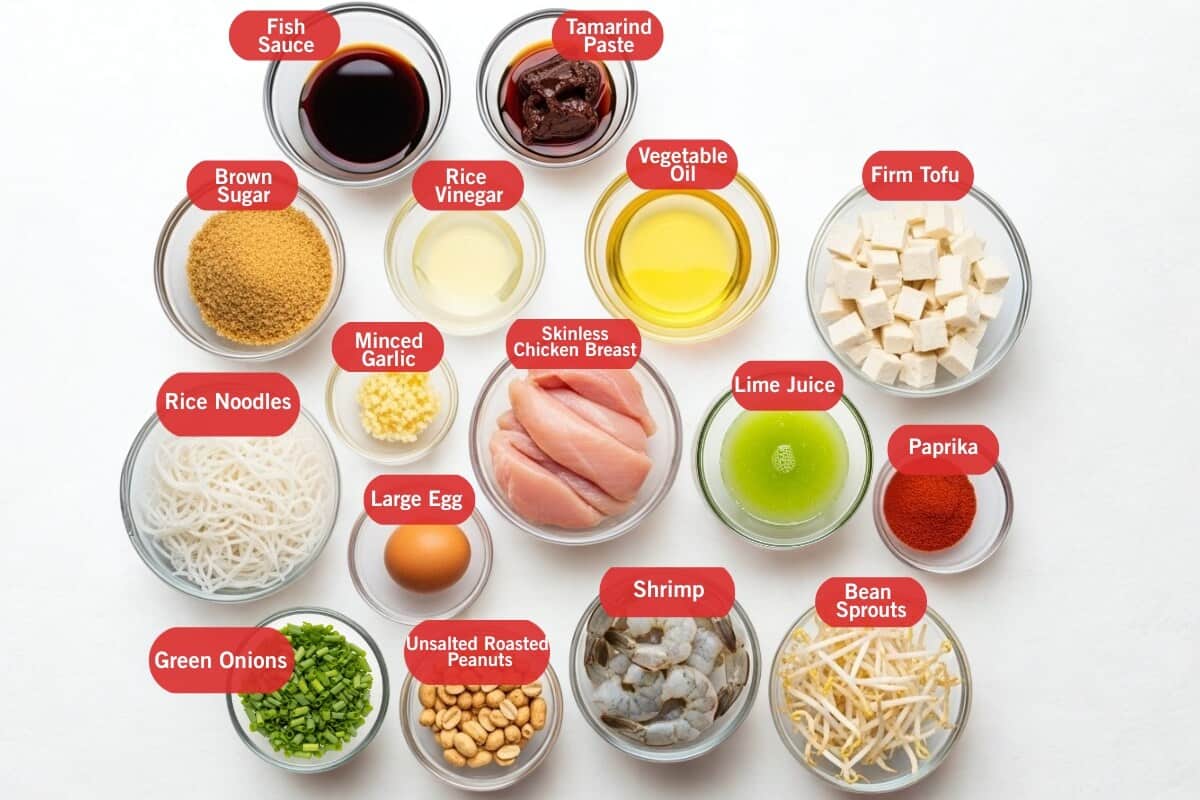
This Pad Thai recipe is packed with bold flavors and fresh textures, thanks to a homemade sauce and a mix of proteins. You’ll love how everything comes together in one sizzling pan.
- Dried Rice Noodles: The base of any good Pad Thai. These chewy noodles soak up all the sweet tangy, and savory sauce beautifully.
- Tamarind Paste: Adds that signature tangy kick to the Pad Thai sauce. It’s what gives the dish its authentic Thai flavor.
- Chicken and Shrimp: A classic combo that makes this dish hearty and satisfying. Use both for maximum flavor and texture.
- Bean Sprouts: Added at the end for a refreshing cruncj that balances the richness of the sauce and proteins.
Note: Please see recipe card at the bottom for a full list of ingredients with measurements.
Add-Ins And Swaps That Still Play Nice
Want to customise without wrecking the balance? These fit right in.
- Chicken Thighs: Juicier than breast and better at handling high heat if you want a heartier protein.
- Extra Chilli Paste: Perfect if you like your pad thai noodles with a proper kick instead of polite warmth.
- Chinese Chives or Spring Onion Greens: A fresh, mild bite that works as a garnish or stirred through at the end.
- Tofu Puffs: Lighter and airier than firm tofu, they soak up sauce beautifully without adding weight.
How To Make This Pad Thai
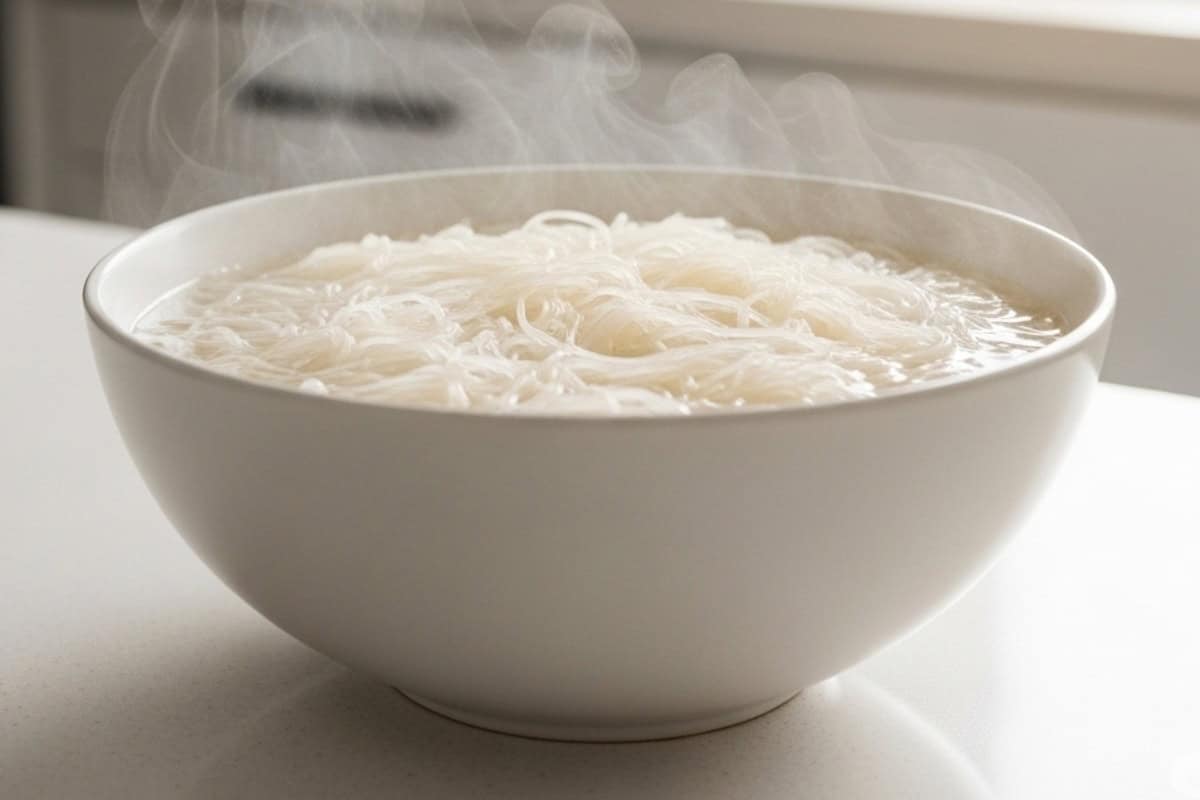
- Soak the Noodles: Place the rice noodles in a large bowl and cover with hot water. Let them soak for about 30 minutes, or until just tender. Drain and set aside.
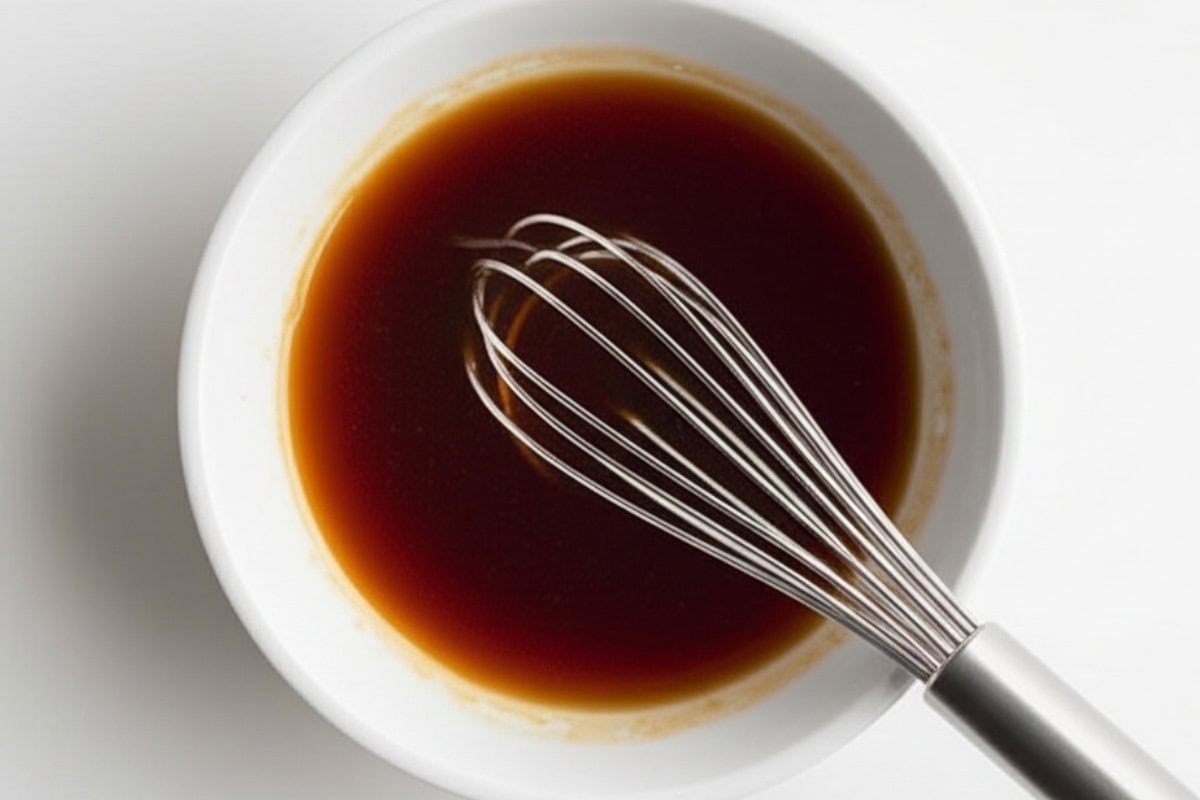
- Make the Sauce: In a small bowl, whisk the fish sauce, brown sugar, tamarind paste, lime juice, and rice vinegar until smooth. Set aside to let the flavors meld.
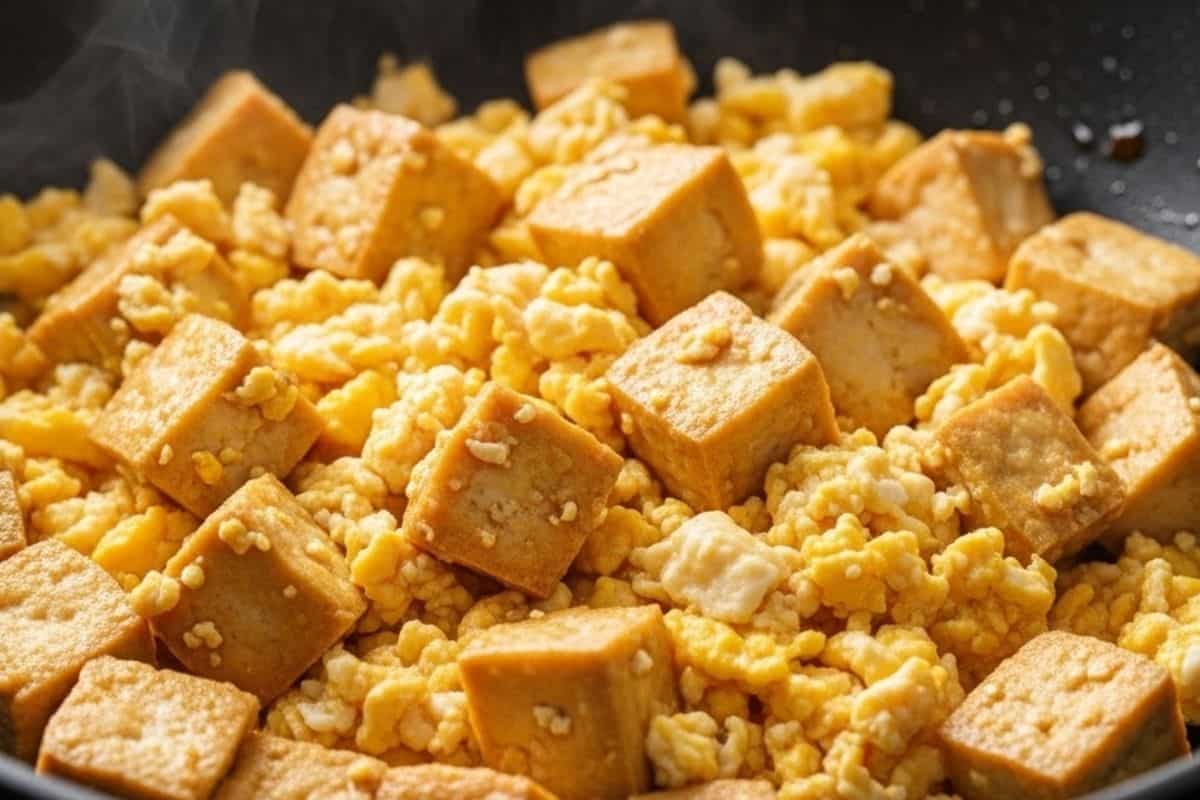
- Cook the Tofu and Egg: Heat 1 tablespoon of oil in a large wok or skillet over medium-high heat. Add the diced tofu and cook until golden. Push to the side and crack in the egg, scrambling it quickly until just set
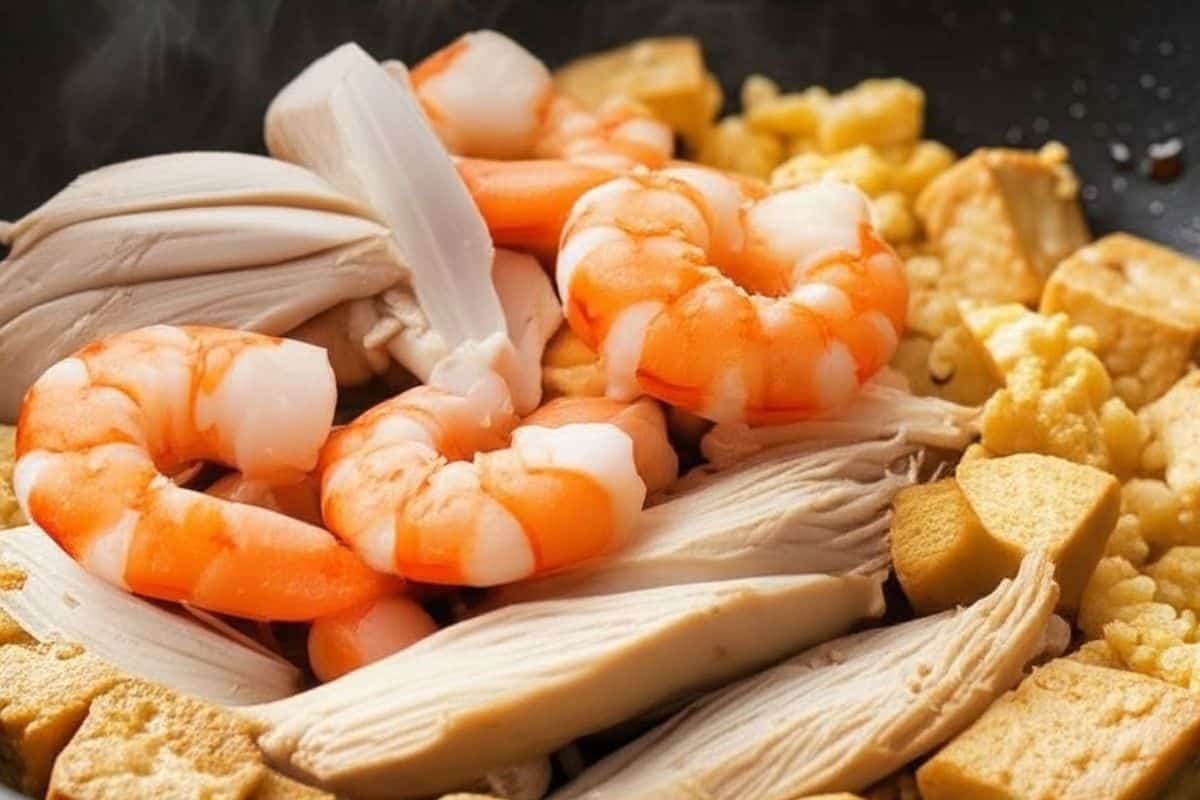
- Add Chicken and Shrimp: Add the sliced chicken to the pan and cook for 2 to 3 minutes, or until no longer pink. Then add the shrimp and cook for another 2 minutes, just until they turn pink and opaque.
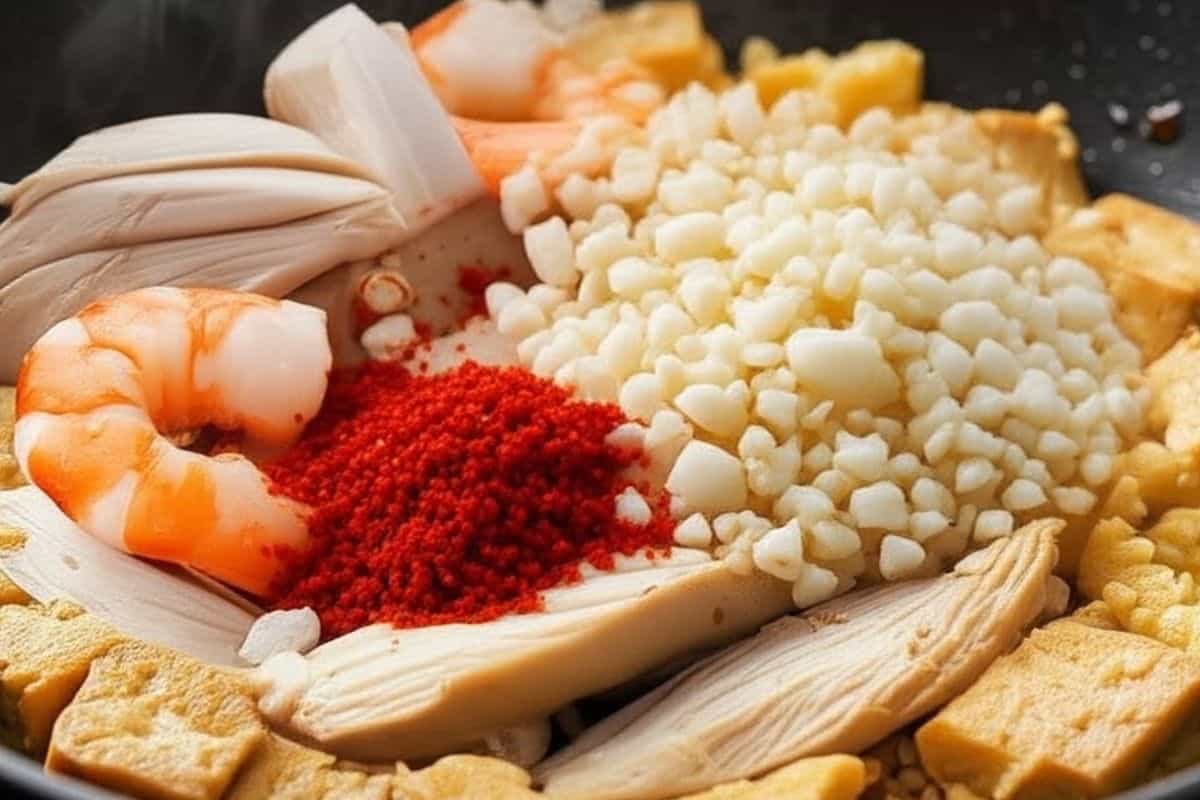
- Stir in Garlic and Paprika: Add the remaining oil, followed by the garlic and paprika. Stir-fry for 30 seconds until fragrant, being careful not to burn the garlic.
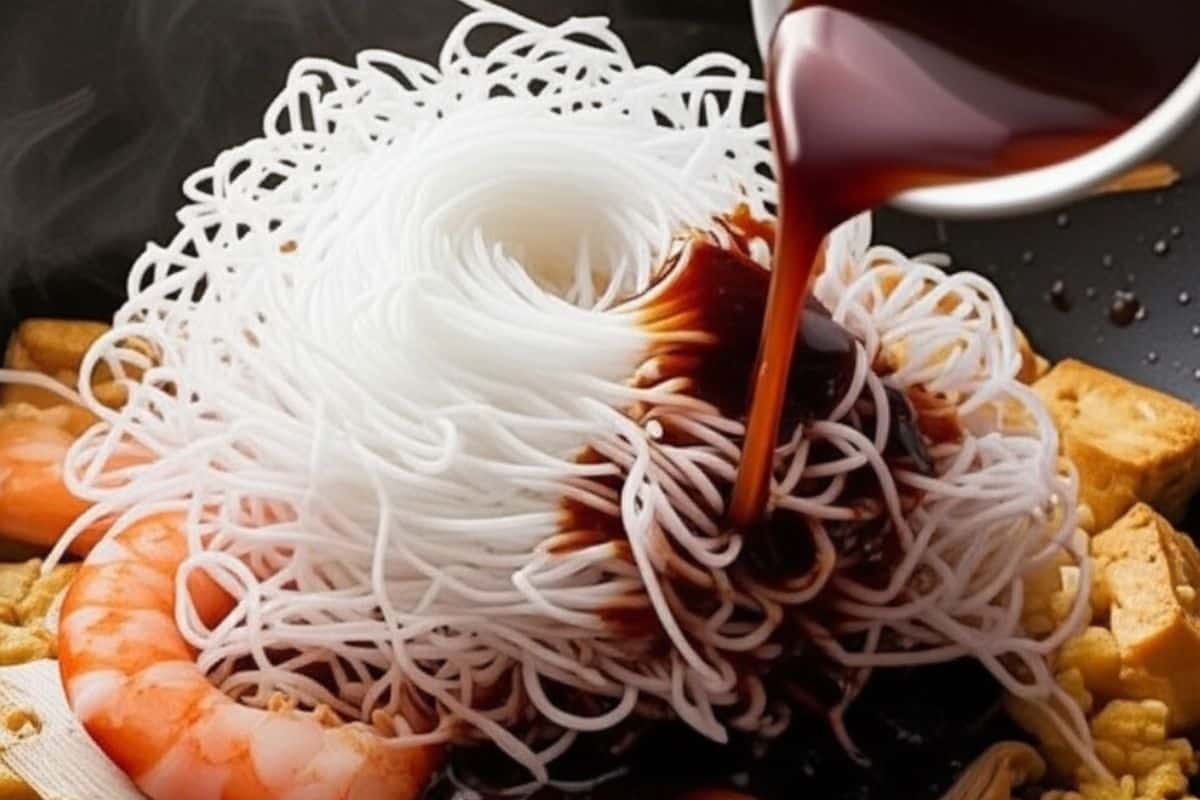
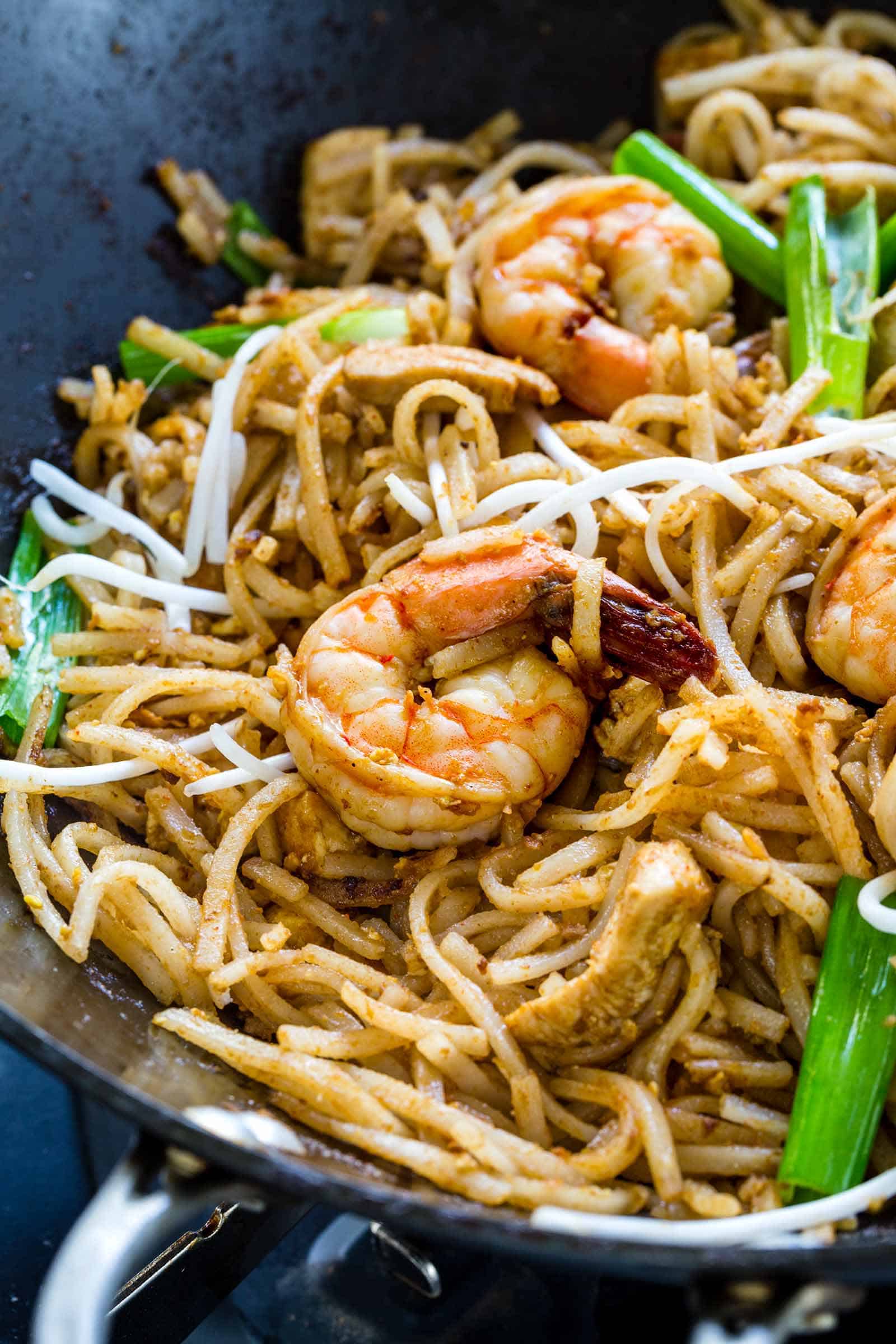
- Toss in the Noodles: Add the noodles to the pan. Pour the prepared Pad Thai sauce over the top and toss everything together to coat evenly.
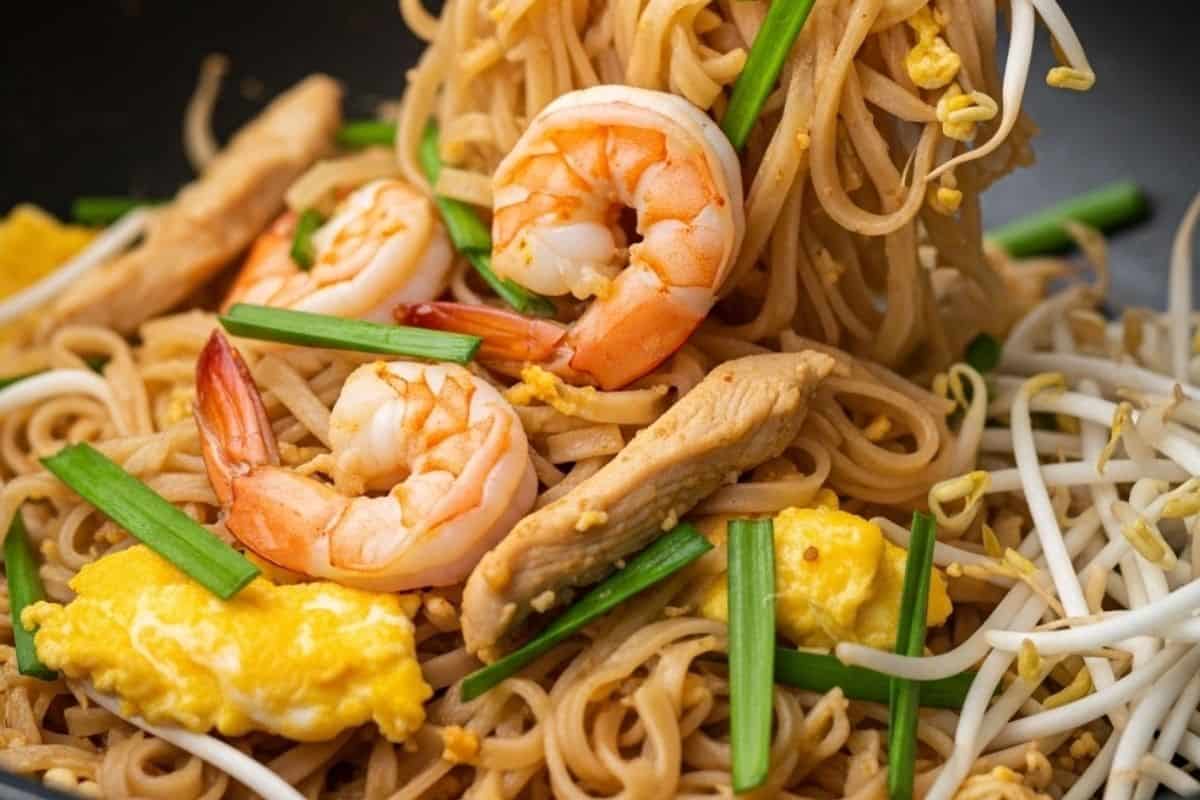
- Finish with Veggies: Add the green onions and bean sprouts. Stir-fry for 1 to 2 minutes until just wilted but still crisp. Taste and adjust seasoning if needed.
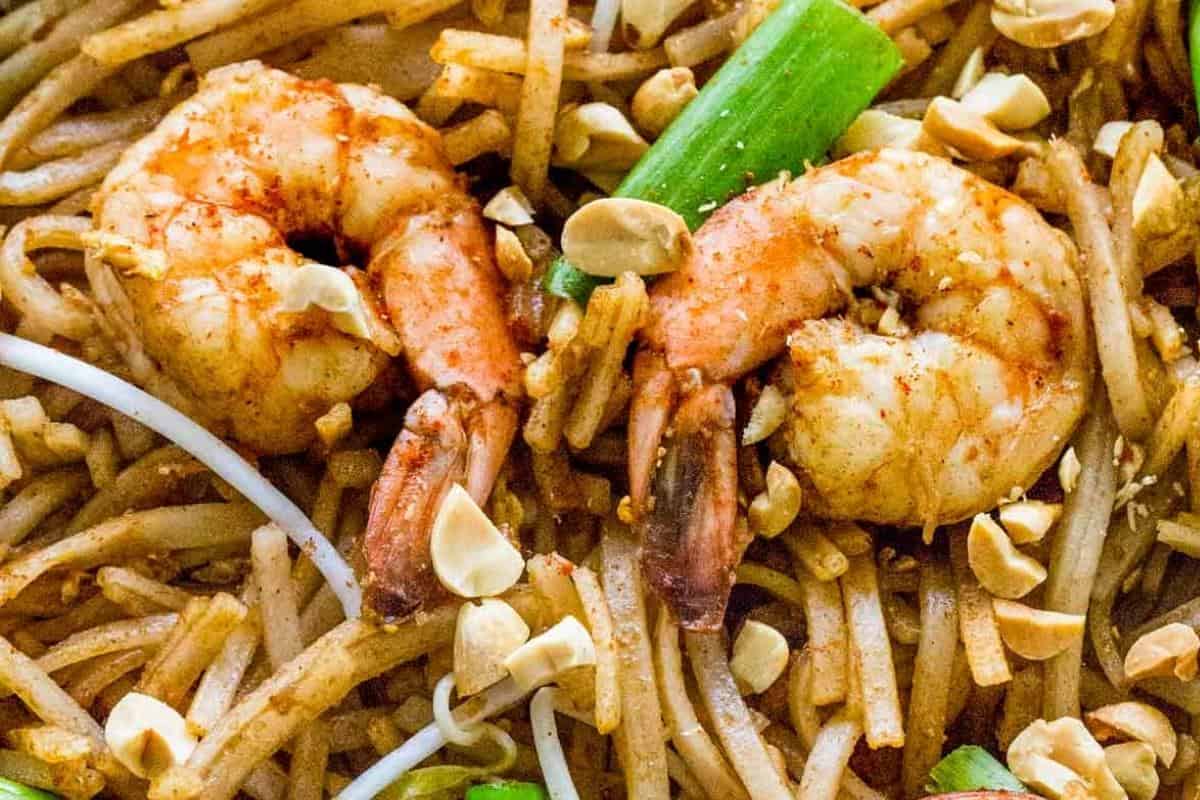
- Serve and Garnish: Divide the Pad Thai into bowls and sprinkle with chopped peanuts. Serve hot with lime wedges on the side for an extra hit of brightness.
Pad Thai is a complete meal on its own, but a few simple sides can round it out beautifully. Try serving it with Sticky Thai Chicken Wings , Thai Chicken Satay or Thai Chicken Meatball Salad for a delectable flavor explosion.
Pro Tips From Someone Who’s Ruined Pad Thai Before
- Soak, don’t boil, the noodles. Hot water softens them just enough so they finish cooking in the pan instead of turning mushy.
- Have everything ready before you start. Pad Thai cooks fast, and stopping to chop mid-wok is how things burn.
- Push ingredients aside when adding eggs. Let them set slightly before tossing so you get soft curds instead of disappearing egg bits.
- Taste before serving. A final squeeze of lime or tiny splash of fish sauce can bring the whole pad thai sauce back into balance.
Look for flat rice noodles, typically labeled as Pad Thai noodles. Medium-width is deal for saoking up the sauce without breaking apart.
Don’t over-soak. Soak until just tender, then rinse with cold water and drain well before stir-frying.
Traditional Pad Thai has a gentle heat, but you can adjust the spice level by adding chili flakes or leaving them out entirely.
Get afreeeBook!
IngredientsUSMetric1x2x3x
- ▢ 14 ounces dried rice noodles
- ▢ 2 tablespoons fish sauce
- ▢ 2 tablespoons brown sugar
- ▢ 4 ½ tablespoons tamarind paste
- ▢ 1 ½ teaspoons lime juice
- ▢ 1 ½ teaspoons rice vinegar
- ▢ 2 tablespoons vegetable oil
- ▢ 1 tablespoon garlic minced
- ▢ 1/2 cup firm tofu diced
- ▢ 1 egg large
- ▢ 1/2 cup boneless skinless chicken breasts sliced
- ▢ 4 ounces shrimp large, peeled and deveined, 16/20 count
- ▢ 1 teaspoon paprika
- ▢ 1/3 cup green onion chopped, 2-inches long
- ▢ 2 tablespoons unsalted roasted peanuts chopped
- ▢ 1/2 cup bean sprouts
Instructions
- Heat a large pot of water until it becomes lukewarm (80 to 90°F/ 27 to 32°C), then turn off heat.
- Add rice noodles and allow to soak until flexible and solid but not completely cooked about 5 to 10 minutes.
- Drain noodles and rinse with cold water.
- In a medium-sized bowl whisk together the sauce ingredients; fish sauce, brown sugar, tamarind paste, lime juice, and rice vinegar.
- Heat a wok or large saute pan over medium-high heat. Add oil, once oil is hot add the garlic and stir for 15 seconds.
- Stir-fry tofu for 1 minute. Push tofu to the side, add the egg to the pan and allow to set for a few seconds.
- Add chicken and mix with the runny egg. Stir until they are just cooked through, about 2 minutes, then add the shrimp and cook until just turning pink, about 1 minute.
- Add soaked noodles, stir to combine and cook for 2 minutes to soften, then pour the sauce onto the noodles, stirring to combine.
- Turn off the heat, add the paprika and toss until noodles turn slightly red in color. Throw in the green onion and allow to wilt from the heat of the noodles.
- Transfer noodles to a serving plate, top with bean sprouts, and chopped peanuts.
Notes
Nutrition
Nutrition information is automatically calculated, so should only be used as an approximation.
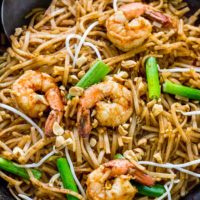
Pad Thai
Ingredients
- 14 ounces dried rice noodles
- 2 tablespoons fish sauce
- 2 tablespoons brown sugar
- 4 ½ tablespoons tamarind paste
- 1 ½ teaspoons lime juice
- 1 ½ teaspoons rice vinegar
- 2 tablespoons vegetable oil
- 1 tablespoon garlic minced
- 1/2 cup firm tofu diced
- 1 egg large
- 1/2 cup boneless skinless chicken breasts sliced
- 4 ounces shrimp large, peeled and deveined, 16/20 count
- 1 teaspoon paprika
- 1/3 cup green onion chopped, 2-inches long
- 2 tablespoons unsalted roasted peanuts chopped
- 1/2 cup bean sprouts
Instructions
- Heat a large pot of water until it becomes lukewarm (80 to 90°F/ 27 to 32°C), then turn off heat.
- Add rice noodles and allow to soak until flexible and solid but not completely cooked about 5 to 10 minutes.
- Drain noodles and rinse with cold water.
- In a medium-sized bowl whisk together the sauce ingredients; fish sauce, brown sugar, tamarind paste, lime juice, and rice vinegar.
- Heat a wok or large saute pan over medium-high heat. Add oil, once oil is hot add the garlic and stir for 15 seconds.
- Stir-fry tofu for 1 minute. Push tofu to the side, add the egg to the pan and allow to set for a few seconds.
- Add chicken and mix with the runny egg. Stir until they are just cooked through, about 2 minutes, then add the shrimp and cook until just turning pink, about 1 minute.
- Add soaked noodles, stir to combine and cook for 2 minutes to soften, then pour the sauce onto the noodles, stirring to combine.
- Turn off the heat, add the paprika and toss until noodles turn slightly red in color. Throw in the green onion and allow to wilt from the heat of the noodles.
- Transfer noodles to a serving plate, top with bean sprouts, and chopped peanuts.
Notes
Nutrition
Thank You! https://cafedelites.com/pad-thai/
